The cookbook has a chapter on how we grocery shop for a week of Tasty but Whole™ meals. Two stops: Costco for the bulk protein and the pantry backbone, then a fresh run for whatever vegetables look good and are actually in season. That framework is the whole point of the book. What it can't do, printed and closed months before you read it, is tell you what's good on the specific Saturday you're standing in a market with a tote bag and no plan. That's what Notes is for.
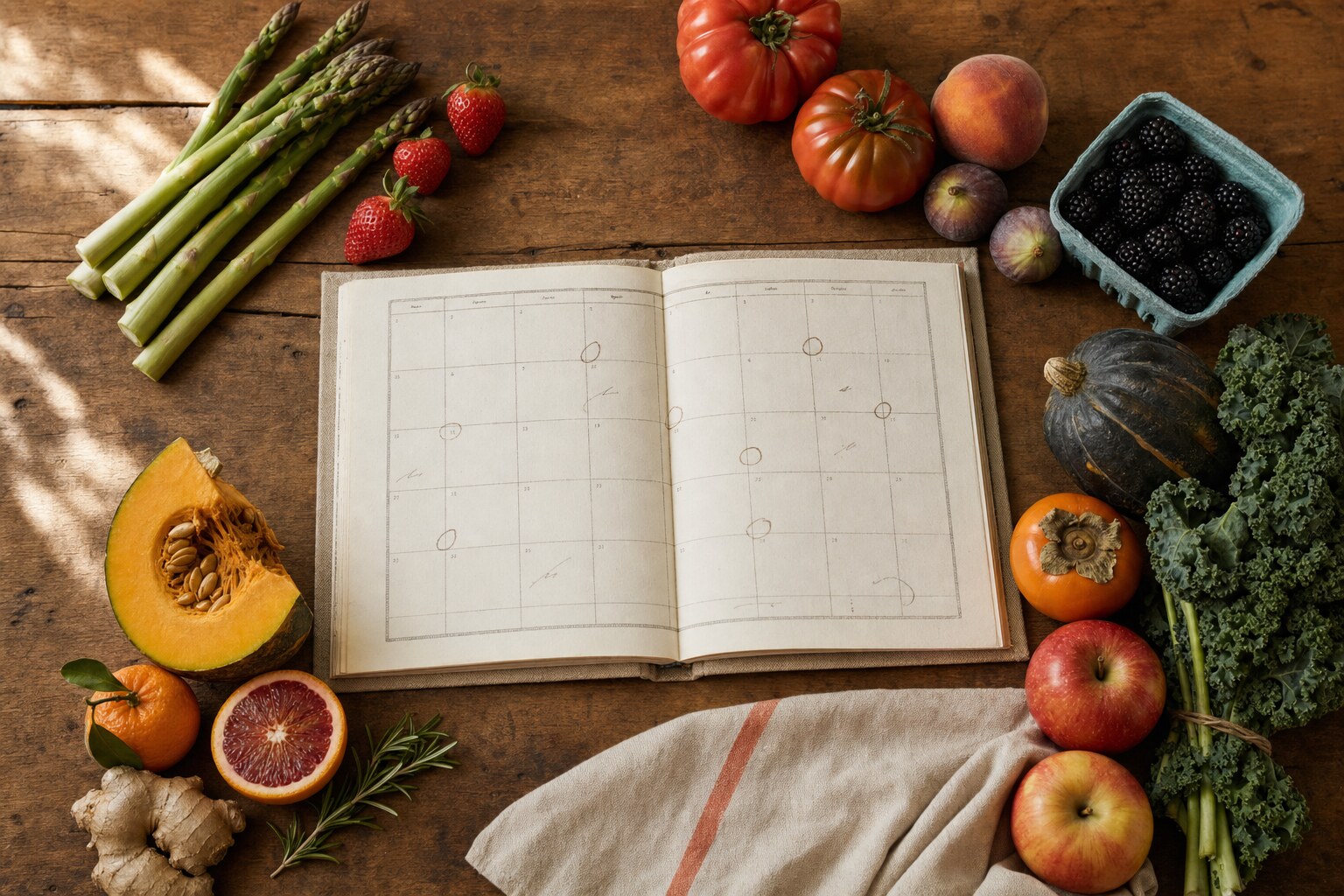
So here's the late-September version. This is the crossover — the two or three weeks when summer's last crops and fall's first crops sit on the same table and you have to decide which one you're actually committing to. It's the most interesting shopping window of the year, and the one most people misread, because the instinct is to keep buying July until the tomatoes visibly give up.
The catch is that the crossover runs on a rolling schedule, and ours is almost certainly not yours. We'll be specific about where we are and where you might be.
Three we'd carry home this weekend — almost anywhere in the US
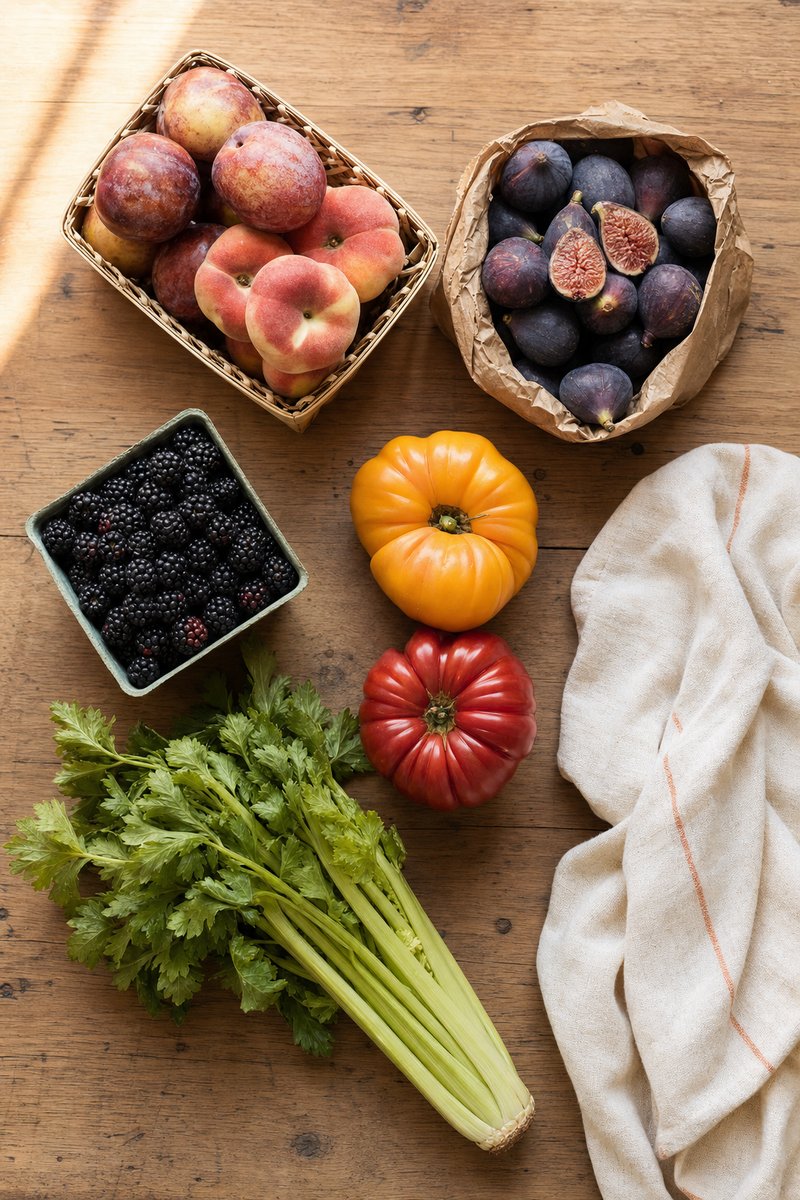
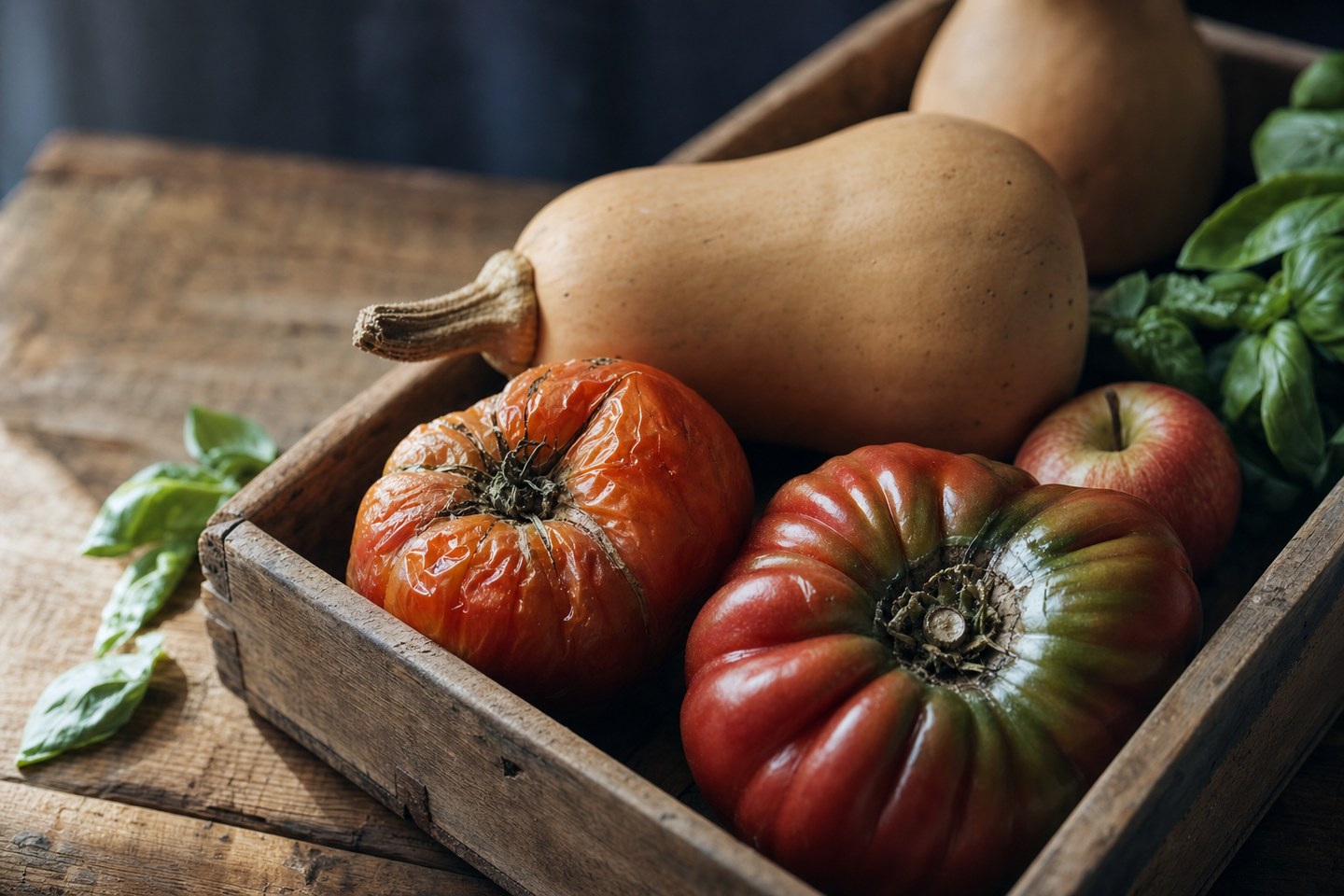
The last real tomatoes. Penn State's harvest calendar runs tomatoes from the second week of July through the third week of October, which means most of the country has somewhere between two and four weekends left. Not two and four months. This is the part people get wrong: they treat the end of tomato season as a gradual fade, and then one week the good ones are simply gone and the bins are full of the hard pink things that get trucked in from a greenhouse. Buy more than you need. Eat the good ones raw on toast with olive oil and salt. Take the rest, halve them, put them cut-side up on a sheet pan with garlic and a hard glug of olive oil, and roast them at 300°F until they collapse. That pan is four future dinners and it freezes flat.
Apples. October is the national peak, and it is a genuinely different fruit at a market than at a supermarket. Penn State runs the harvest from the end of July through the end of October; in Michigan, apples come off the trees September through December with storage fruit carrying into February. The thing worth doing right now is asking which variety came in this week, because early apples and late apples are not the same product. Early ones are loose and floral and should be eaten within days. Late ones — the ones arriving now — are dense, keep for months, and are the ones you actually want for cooking. If you have only ever had a grocery store apple in April, you have been eating a nine-month-old apple, and nobody told you.
The first winter squash. They're arriving everywhere now and running through the first week of November. Buy one heavy one. Then read the next-but-one section before you do anything with it, because there is a step here that almost everybody skips.
The frost map, or: when your summer actually ends
In August we mapped peaches by state, because a peach is only the peach for about two weeks where you live. The fall version of that map is simpler and more useful, because one variable drives nearly all of it.
Frost. The first hard freeze is what kills the tomatoes, peppers, eggplant, and basil, and it's what hands the table over to squash, brassicas, and roots. So if you know roughly when your first freeze lands, you know your own crossover date without needing anyone's produce calendar.
NOAA's 1991–2020 climate normals put it roughly like this:
- Upper Midwest, northern Plains, northern New England: mid-September to early October, and early September farther north. Your crossover is happening right now or already happened. Bismarck averages about September 23 and Duluth about September 26 — for a lot of you, this is the week.
- Midwest, Great Lakes, Ohio Valley, interior Northeast: early to late October. Denver runs about October 6, Albany October 9, Des Moines October 14, Indianapolis and Pittsburgh around October 22. You have two to four more weekends of summer produce and then a hard stop.
- Mid-Atlantic, upper South: late October into mid-November. Virginia starts around early October and the dates slide later as you go south.
- Deep South and Florida: November into December, and parts of Florida don't freeze every year at all. Your summer crops keep going while everyone north of you is already roasting squash.
- Most of California, outside the mountains: not until at least December.
That last one is us, and it's worth being honest about what it does to our judgment.
The fall crop nearly everyone gets wrong
Winter squash. Not how to cook it — how to handle it in the ten days before you cook it.
Most winter squash is not ready when you buy it. Illinois Extension is specific about this: the majority of winter squash benefits from curing at room temperature, around 70°F, for ten to twenty days. Curing hardens the rind and converts starch to sugar. A cured butternut is sweeter, denser, and keeps for months. An uncured one is watery and flat, and most people who think they don't like squash have simply never had a cured one.
There are exceptions, and they matter: acorn, delicata, and sweet dumpling should not be cured. Curing those three makes them worse. Buy them, keep them cool, cook them within a few weeks.
So the actual instruction is this. Buy your butternut, hubbard, buttercup, or spaghetti squash now. Put it on the counter, somewhere warm and out of the way, and leave it alone for ten to twenty days before it's fit for company. Then move it somewhere cool and dry — 45 to 55°F, a garage or a basement — and it will hold until well past the holidays. Two more things from the same source: leave two inches of stem attached, and never pick a squash up by the stem. The stem comes off, the wound opens, and the whole thing rots from the top.
One more fall note, filed under things nobody warns you about. October is when the table pivots hard from raw summer produce to cooked brassicas — broccoli comes into season in October and runs through March, with cauliflower and cabbage right behind it. A week of serious brassica eating has downstream effects. Open a window.
Where we are, and why it probably isn't where you are
We shop Northern California farmers markets, which means we're the weird ones on this particular map. No frost until December means our crossover isn't driven by a freeze at all — it's driven by daylight and the first rain. Summer crops here just quietly get worse over several weeks instead of ending in one cold night.
Practically, that means we're still getting decent tomatoes and peppers while a reader in Duluth has already lost theirs, and it means our fall arrivals are a different list. Right now persimmons are running September through December and pomegranates September through January, both almost entirely Californian. UC Master Gardeners note October as walnut and almond harvest, the close of the apple and Bosc pear windows, and the start of the table olive harvest, picked while the fruit is still green.
If you're in frost country, do not take our timing as the national timing. We have an unusually long runway and it makes us lazy about urgency. Trust your own freeze date over anything we say about how much time is left.
What to prep for
Fresh cranberries. Harvest runs mid-September to early November with the bulk of it in October, and fresh berries are in stores roughly September through January. They are only actually fresh for a few of those months. Buy two bags in October, freeze one whole — they freeze perfectly, straight in the bag, no preparation.
Citrus begins. California citrus peaks September through June. The good mandarins are six to eight weeks out. Let the stone fruit go without mourning it.
New-harvest olive oil. Table olives come off in October and the new oil follows. If you have never had oil from the current harvest, it's worth ordering once — it's grassy and peppery in a way that supermarket oil never is, and it fades within months, which is the entire point.
The heuristic, updated for fall
In August we said: if the market piles it high and the smell hits you from three feet away, buy it. If it looks perfect and has no scent, keep walking.
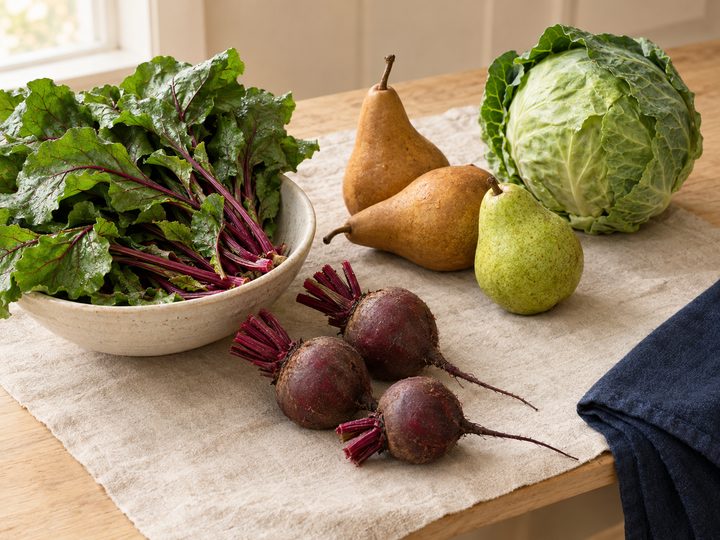
That rule is for summer produce, and it stops working right about now. A butternut squash has no smell. Neither does a good apple at arm's length, or a cabbage, or a beet. Nose beats eyes in August; in October, weight beats both. Pick up two squash of the same size and buy the heavier one — density is sugar and flesh, lightness is air and water loss. Press a thumbnail against the rind; if it dents, it was picked early and won't keep. For apples and roots, same idea: heavy for its size, firm everywhere, no give at the shoulders.
And the thing the cookbook already says, which survives the season change intact: let the market tell you what to cook. We still walk in without a list, buy whatever looks beautiful, and work it out at home. In late September that just means you come home with a bag holding the last of one season and the first of the next, which is a good problem and a better dinner.
We'll do this again as the fall settles in.
— Adam & Kiana