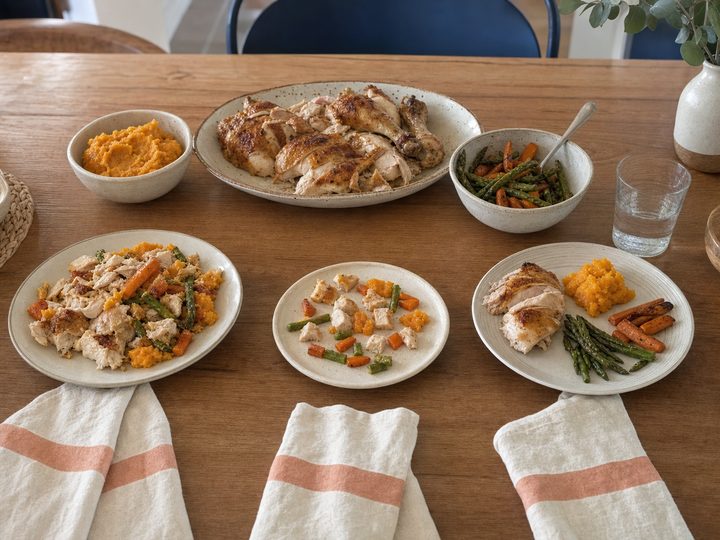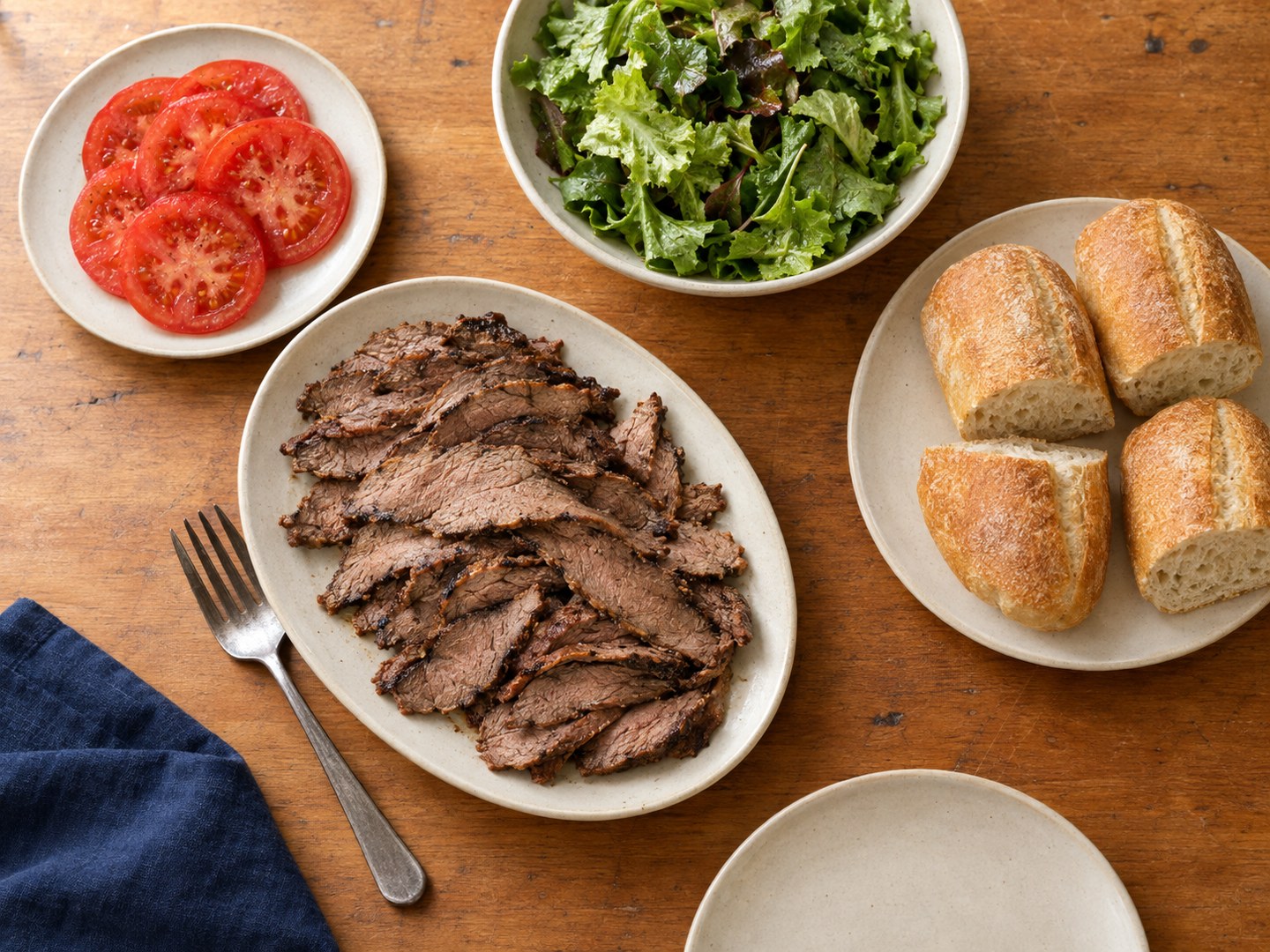
We had leftover tri-tip. We also had tomatoes that needed eating. So dinner became build-your-own sandwiches, with the tomatoes sliced up and a quick salad alongside.
Everyone ate meat that night. But if someone hadn’t wanted it, tofu or cheese could have taken its place in their sandwich. The meal would still have been the same idea, built differently.
For us, this kind of dinner usually begins with leftovers and three questions: What do we have? What needs using? What do we need to fill the gaps?
It doesn’t begin with a board. It begins with a fridge.
Give the leftovers a new job
There is a difference between repeating a dinner and using its ingredients again. Leftover tri-tip can be the beginning of a sandwich rather than a smaller version of the plate it came from.
That is the useful move: choose a new format before deciding you need a new meal. A sandwich, bowl, wrap or plate with a few separate components gives the ingredients somewhere to go.
Start with the food you want to use, then ask what would make it appealing tonight. Does it need something fresh alongside? Something substantial underneath? A different sauce? Sometimes the missing piece is small enough that you can make it without starting dinner over.
This is the practical side of Tasty but Whole™: keep the enjoyment and the whole-food thinking in the same meal. There is no extra credit for cooking everything from scratch twice.
Find the gap before filling it
For a leftovers dinner, try asking four questions. These are prompts for assembling food, not a nutrition formula.
- What is the substantial part? Start with the meat, fish, eggs, tofu, beans or other ingredient you want to build around.
- Where are the plants? Look for vegetables or fruit that fit the meal, whether already cooked or ready to prepare.
- Is there enough food? Bread, potatoes, grains, beans or a larger helping of what you already have can make the difference between a few bites and dinner.
- What makes it come together? A sauce, dressing, spread, squeeze of lemon or something crunchy can give the parts a common direction.
You do not need a separate dish for every answer. Beans might be the substantial starting point as well as part of a grain bowl; roasted vegetables might work inside a sandwich and beside it.
In our tri-tip dinner, the meat gave us the starting point. The tomatoes had a place in the sandwiches, and the salad went alongside. We didn’t need every ingredient to carry the whole load.
Start with what needs attention
Before adding anything to a shopping list, look at what is already available and safe to use. Pick the ingredient that gives you the clearest direction, rather than trying to make every container in the fridge participate.
A useful order is: identify the leftovers, choose the format, then find the missing pieces. If you have cooked vegetables but nothing substantial, solve that gap; if you have meat and bread, look for produce and a finish that would make a sandwich worth eating.
Not everything has to go together. A little leftover soup does not have to become sandwich sauce just because both are present.
Make the ingredients audition for dinner, not merely attend it. The goal is a meal you want, not the largest possible clearance of the fridge.
“Needs using” also has a boundary. Never taste questionable food to establish whether it is safe; USDA specifically warns against that test (USDA leftover guidance).
One dinner can become different plates
Build-your-own sandwiches make the distinction easy to see. Everyone shares the format, but the contents and amounts can change.
Our actual dinner was tri-tip for everyone. Tofu or cheese were possible alternatives, not a second meal we made that night. The useful principle is that you can offer a different filling without rebuilding the entire dinner around it.
That does not mean different fillings are nutritionally identical. It means the structure is flexible: choose ingredients and amounts that work for the person eating them.
Put the components within reach and let the plates differ. Someone might want more filling, another sandwich or a larger salad; they do not have to assemble the same proportions to be eating together.
We explored the family-table idea in Feeding Riley at the family table. Here, the point is simpler: you can share dinner without requiring identical plates.
Three ways to build from what’s left
These are suggested combinations, not three dinners we are claiming to have served. Use them as starting points and substitute what fits your household.
- The sandwich dinner: Begin with leftover cooked meat or prepared tofu, then add bread, sliced vegetables and a spread you already like. Put a salad or another vegetable alongside. Our tri-tip version is the real example; the other fillings are options.
- The warm-and-cold bowl: Start with leftover roasted vegetables, add beans or another cooked protein, and choose a grain or potato base if you want one. Finish with fresh greens and a dressing that suits the ingredients. Let the components stay separate until people build their bowls.
- The more-substantial plate: When the leftovers are only enough to play a supporting role, add one new anchor, such as eggs or beans, and serve with potatoes or toast and the remaining vegetables. You can cook something new without treating the whole meal as a fresh production.
For a bigger appetite, add a meaningful portion of the food rather than more garnish. The object is to finish dinner fed, not impressed by how many little bowls you own.
Keep the easy part easy
Choose one gap worth cooking for, if there is one. A quick salad is different from deciding the leftovers need homemade bread, two sauces and a garnish that requires its own trip.
Use ordinary plates and serving dishes. Keep the selection short enough that putting dinner away does not feel like a second shift.
A leftovers meal also needs a few firm safety boundaries:
- Store promptly: Refrigerate perishable food within two hours, or one hour when the temperature is above 90°F; keep the refrigerator at 40°F or below and use shallow containers for leftovers (USDA).
- Keep track: Label leftovers with the food and date, and use refrigerated leftovers within three to four days (Illinois Extension).
- Reheat safely: When reheating leftovers containing meat or poultry, bring them to 165°F and check with a food thermometer (USDA).
- Adapt for young children: Prepare food in shapes, sizes and textures appropriate to their development, and supervise them seated upright; tough meat, large cheese chunks and hard raw produce need particular attention (CDC, 2026).
- Treat allergies separately from preferences: Clean preparation surfaces and equipment, keep separate utensils, and serve allergy-safe food separately rather than relying on a shared build-your-own spread (Food Allergy Research & Education).
Those boundaries come first. Within them, keep the actual meal as straightforward as you can.
Dinner doesn’t need a centerpiece
The next time the fridge has pieces of dinner rather than an obvious dinner, start with one useful question: what could this become? Pick a format, fill the real gaps and stop when you have enough.
For us, leftover tri-tip became sandwiches. Tomatoes that needed eating found a place, a quick salad went alongside, and everyone could build their own.
Nothing needed to become a display. It just needed to become dinner.
— Adam & Kiana