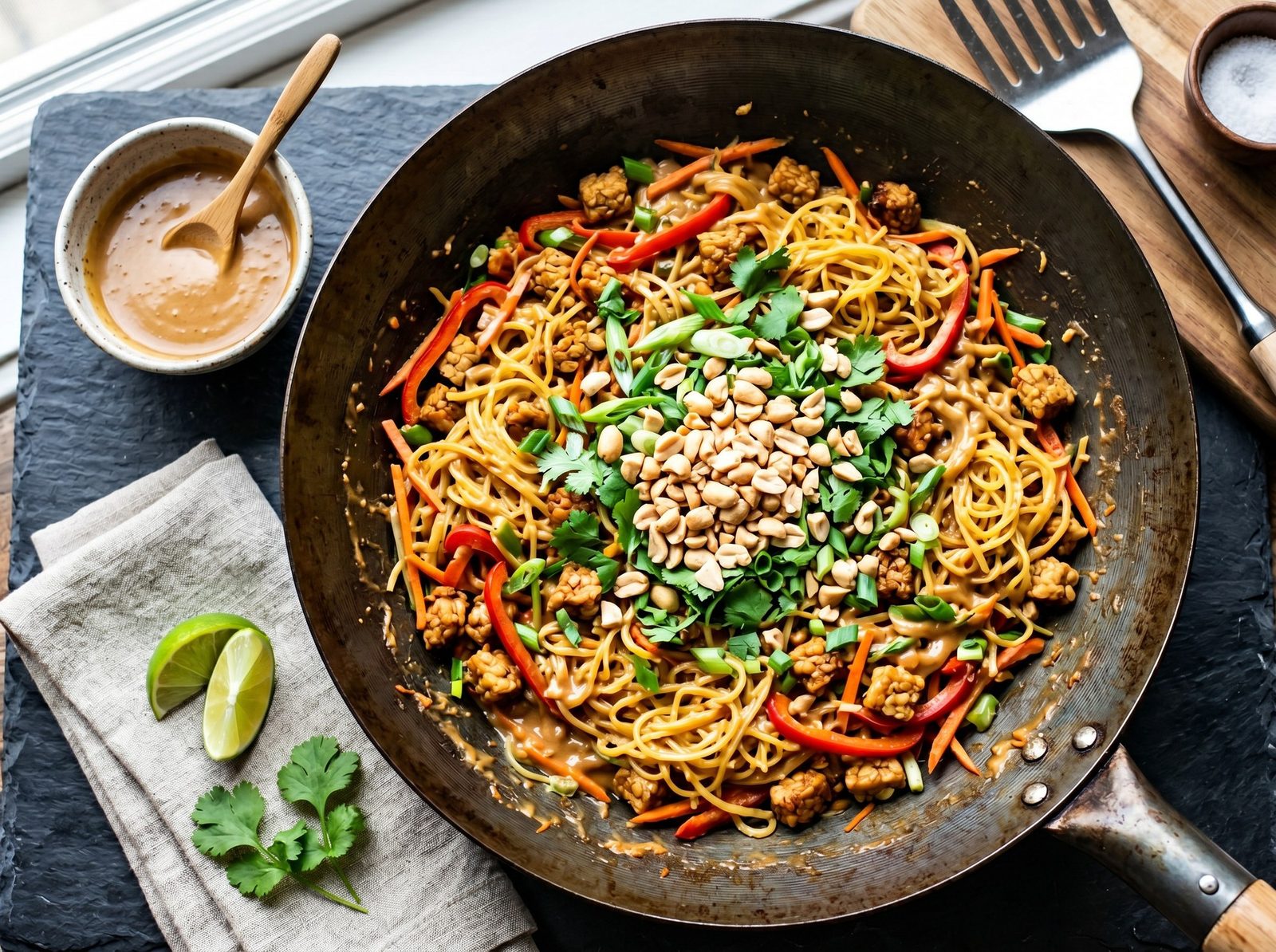
Spaghetti Squash Pad Thai with Tempeh and Quick Peanut Sauce
We're going to be upfront: this is not pad thai. Pad thai is a specific Thai dish with a specific balance of tamarind, fish sauce, palm sugar, and rice noodles, perfected over generations. What this is: a whole-food riff inspired by those flavors, using spaghetti squash strands instead of noodles and a quick peanut-lime-tamari sauce that scratches a similar itch. Crumbled tempeh gives it protein and a satisfying chewy bite. It's fun to eat, packs well for lunch, and the spaghetti squash is genuinely a good vehicle for the sauce once you stop trying to pretend it's actual pasta and let it be its own thing.
- VEG
- GF
- DF
- PREP
Calories ~450 · Protein ~21g · Carbs ~32g · Fat ~30g
Ingredients
For the spaghetti squash:
- 1 medium spaghetti squash, halved lengthwise and seeded
- 1 tablespoon neutral oil (avocado or light olive oil), for squash
- Kosher salt
For the peanut sauce:
- 4–5 tablespoons natural peanut butter (creamy)
- 3 tablespoons tamari (use certified GF tamari to keep this dish gluten-free; do not substitute regular soy sauce)
- 1 1/2 tablespoons fresh lime juice
- 1 1/2 tablespoons maple syrup
- 1 1/2 teaspoons toasted sesame oil
- 1 1/2 teaspoons fresh ginger, grated
For the stir-fry:
- 1 tablespoon neutral oil (avocado or light olive oil), for tempeh
- 8 ounces tempeh, crumbled into small pieces (for gluten-free, choose tempeh labeled gluten-free — many brands include barley or other grains)
- 1 medium red bell pepper, thinly sliced (~¼-inch strips)
- 2 medium carrots, finely shredded or julienned
- 3 green onions, sliced, whites and greens separated
- 1/3 cup roasted peanuts, roughly chopped, for topping
- Fresh cilantro and lime wedges, for serving
Method
- Preheat your oven to 400°F (200°C). Brush the cut sides of the spaghetti squash with 1 tablespoon of the oil and season with salt. Place cut-side down on a parchment-lined sheet pan.
- Roast for 30 to 40 minutes until the flesh is tender and you can easily scrape it into strands with a fork. Start checking at 30 minutes, the timing depends on size. Let cool slightly, then use a fork to scrape the flesh into spaghetti-like strands. Set aside.
- While the squash roasts, make the peanut sauce. Whisk together the peanut butter, tamari, lime juice, maple syrup, sesame oil, and ginger until smooth. Add warm water a tablespoon at a time until you reach a pourable, sauce-like consistency (typically 2–3 tablespoons). Set aside.
- Cook the tempeh. Heat 1 tablespoon oil in a large skillet or wok over medium-high heat. Add the crumbled tempeh and cook in a single layer without stirring for the first 2–3 minutes to get good browning, then toss and continue cooking until golden brown and crispy on the edges, about 5 minutes total. Transfer to a plate.
- In the same skillet, add the bell pepper, carrots, and green onion whites. Cook for 2 to 3 minutes until crisp-tender. You want some bite left in the vegetables.
- Add the spaghetti squash strands and the cooked tempeh back to the skillet. Pour the peanut sauce over everything and toss to coat evenly. Cook for 1 to 2 minutes until warmed through.
- Serve topped with chopped peanuts, green onion greens, fresh cilantro, and lime wedges.
Variations & Notes
- Extra Hungry: Serve alongside steamed jasmine rice or add a fried egg on top.
- Protein add-on: Use cubed firm tofu instead of tempeh, or add shredded cooked chicken (no longer vegan). Shrimp is outstanding if you eat seafood — sauté until opaque throughout, about 145°F (also no longer vegan).
- Sub notes: If you can't find tempeh, extra-firm tofu works: press it first and cut into cubes. Almond butter can replace peanut butter for a nut allergy–adjacent swap (still a tree nut, but avoids peanuts). For true nut-free, use sunflower seed butter and omit the peanut topping.
- Shortcut: Microwave the spaghetti squash halves (cut-side down on a plate with a little water, 10 to 12 minutes) if you're short on time.
- Storage: Keeps refrigerated for up to 4 days. The squash strands can get a little soft on reheating, but the flavor holds well. Store the peanuts separately and add them fresh so they stay crunchy.
# Interlude: How My Gut Taught Me to Cook Differently
Kiana's perspective
---
I didn't set out to be particular about food; my body pushed me there. In elementary school I suddenly became lactose intolerant, then just as suddenly bounced back and could drink the 1% milk my mom poured every day. Years later, in my early twenties, the same stomach pain returned, and it took me a while to realize dairy was behind it. I went vegan to strip out anything that might irritate my gut, and the pain went away. That was my first clear signal that how I eat has real consequences.
Eventually I pinned the problem on lactose and tried lactase pills. They helped for a bit, until I started getting rashes on my face. So dairy was out again, and that forced me to rethink how I cooked. I've always had a big appetite and an active routine, so being vegan couldn't just mean cutting things out; it had to work day-to-day. When I moved in with Adam, he shifted to eating Paleo after watching my mindful food selection. That meant our only overlapping ingredients included vegetables and a few grains, so we had to get practical about what would keep us both full. I leaned on cashew-based sauces with nutritional yeast, sweet-potato-heavy dishes, and simple stir fries we could each customize with our own proteins. Our kitchen became the place where we figured out how to feed two different diets without cooking two separate dinners.
<div class="pullquote">How I ate had real consequences. When I got it right, my body told me.</div>
Over time, my eating patterns shifted again. I landed on a pescatarian baseline, with a bit of dairy from small farms whose practices I could stand behind. Then I became pregnant with my daughter, and my cravings ruled my decisions. I wanted red meat and cottage cheese—later I found out I was very anemic, and it made sense. I decided to add meat and dairy back in, but only from suppliers I trusted, and I still avoided pork because I respect their intellect too much to eat them. During my son's pregnancy, even that boundary got tested; pork started to smell good, and I'd occasionally steal a bite. I've tried to stay honest about both sides of that tension: listening to my body, but also paying attention to my values.
Now, I eat what my body asks for, with some ground rules. My plate is always colorful, often green-dominant, and built from whole, organic ingredients from sources I know. The Sunday Farmers' Market has become part of our family routine. My daughter is learning how to pick the sweetest organic strawberries, look for unique local produce, and talk with the people who grow our food. At home, I've started growing some of our vegetables in the backyard, so we see the full path from seed to plate.
This cookbook is a reflection of my journey. It's a reflection of years spent navigating lactose intolerance, changing diets, pregnancy cravings, and competing preferences at the dinner table—and discovering that you can be selective and still feel deeply satiated. You can adapt meals to multiple diets with a few smart substitutions. You can care for your own health and still care for the animals, farmers, and land that make your meals possible. And you can turn regular meals into a place people actually want to hang out for a while. That's the kind of table I try to build in my own kitchen, and it's the spirit I hope this book brings into yours.
<!-- SECTION: type=recipe_section -->
# Quick but Whole