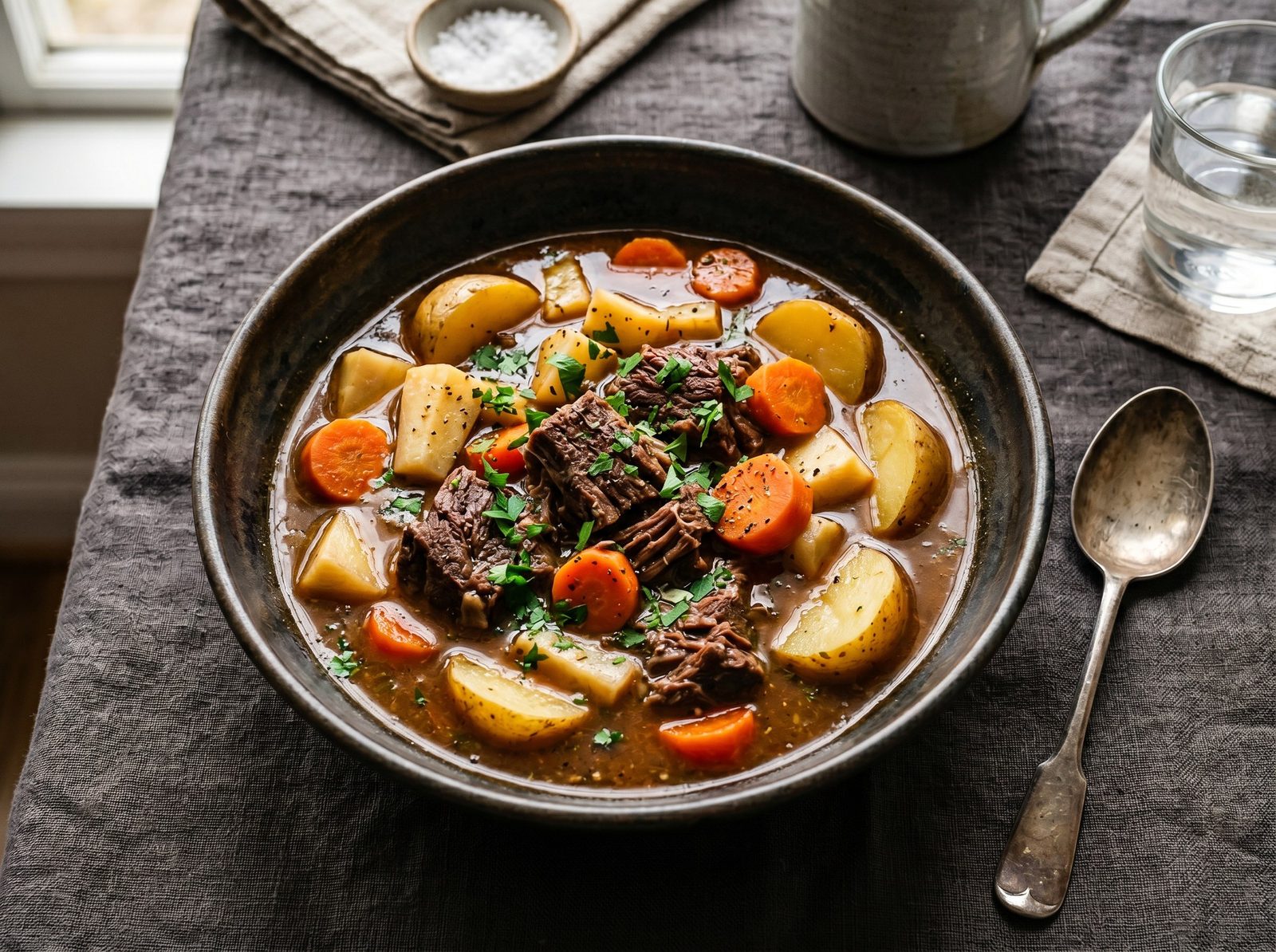
Slow Cooker Beef and Root Vegetable Stew
This is Sunday cooking in its purest form. You spend fifteen minutes browning beef and chopping vegetables, then it is a dump-and-go: everything into the slow cooker and the rest of the day is yours. When you come back, the house smells like a French grandmother's kitchen and the beef is so tender it falls apart when you look at it wrong. We make this on cold Sundays, often after a day on the mountain, skis still damp by the door, and eat it through Tuesday. The red wine isn't mandatory, but it adds a richness that broth alone can't match; most of the alcohol cooks off over the long simmer (not quite all — use broth if that matters at your table). Parsnips are the secret weapon here. If you've never put parsnips in a stew, you're about to understand why root vegetables have fans.
- PRO
- GF
- DF
- PF
- PREP
Calories ~500 · Protein ~27g · Carbs ~22g · Fat ~33g
Ingredients
For the stew:
- 2 pounds grass-fed beef chuck, cut into 1½-inch cubes
- 3 medium carrots, peeled and cut into 1-inch chunks
- 2 medium parsnips, peeled and cut into 1-inch chunks
- 1 pound baby potatoes (Yukon Gold or red), halved
- 1 medium yellow onion, diced
- 4 cloves garlic, minced
- ¾ cup dry red wine (or substitute additional beef broth)
- 2 cups beef broth
- 2 tablespoons tomato paste
- 2 teaspoons fresh thyme leaves (or 1 teaspoon dried)
- 2 bay leaves
- 1 tablespoon arrowroot starch or tapioca starch, mixed with 2 tablespoons cold water
- 2 tablespoons extra-virgin olive oil
- Kosher salt and freshly ground black pepper, to taste
- Fresh parsley, chopped, for serving
Method
- Pat the beef cubes dry with paper towels and season generously with salt and pepper on all sides. Start with fully thawed beef — frozen meat in a slow cooker spends too long in the danger zone to be safe.
- Heat the olive oil in a large skillet or Dutch oven over high heat. Sear the beef in batches, until a deep mahogany-brown crust forms on each side, about 2 minutes per side on high heat. Don't crowd the pan. If the beef is steaming instead of searing, you've got too many pieces in there. Transfer seared beef to the slow cooker.
- Reduce heat to medium. Add the diced onion to the same skillet and cook, stirring occasionally, until softened and beginning to turn golden, 6–8 minutes. Add the garlic and cook for 30 seconds.
- Pour in the red wine and let it bubble for 1–2 minutes, scraping the bottom of the pan to deglaze. Pour the wine and onion mixture over the beef in the slow cooker.
- Add the carrots, parsnips, potatoes, tomato paste, beef broth, thyme, and bay leaves to the slow cooker. Stir to combine. The liquid should come about two-thirds of the way up the ingredients; add a splash more broth if needed. The insert itself should be between half and two-thirds full — that's the range slow cookers are designed to heat safely and evenly.
- Cover and cook on low for 7–8 hours or high for 4–5 hours, until the beef is fork-tender and the vegetables yield easily to a knife.
- About 15 minutes before serving, remove the bay leaves. Stir in the arrowroot slurry and cook with the lid off for 5–10 minutes, until the broth coats the back of a spoon. Do not leave on heat longer or the arrowroot may thin back out.
- Taste and adjust salt and pepper. Ladle into deep bowls and finish with fresh parsley.
Variations & Notes
- Vegan Swap: Replace the beef with 2 (15-ounce) cans of drained chickpeas and 1 pound of cubed butternut squash. Use vegetable broth and skip the searing step: toss everything in the slow cooker and cook on low for 6 hours. Add the butternut squash during the last 1–2 hours so it doesn't break down.
- Paleo-Friendly Adjustment: Already paleo-friendly. Swap the potatoes for extra parsnips or sweet potato chunks if you're strict about white potatoes.
- Extra Hungry: Serve over a mound of mashed potatoes or with a thick slice of crusty bread. Adam adds a fried egg on top, which is weird but somehow works.
- Substitutions: Stew meat from the butcher counter works if you don't want to cube the chuck yourself. Turnips or rutabaga can stand in for parsnips.
- Storage: Keeps in the fridge for 3–4 days (shallow containers, into the fridge within 2 hours — see the chapter note). Freezes perfectly for up to 3 months: in fact, it's arguably better after freezing and reheating. Thaw overnight in the fridge and reheat on the stove to a full simmer — not in the slow cooker, which climbs too slowly for leftovers.