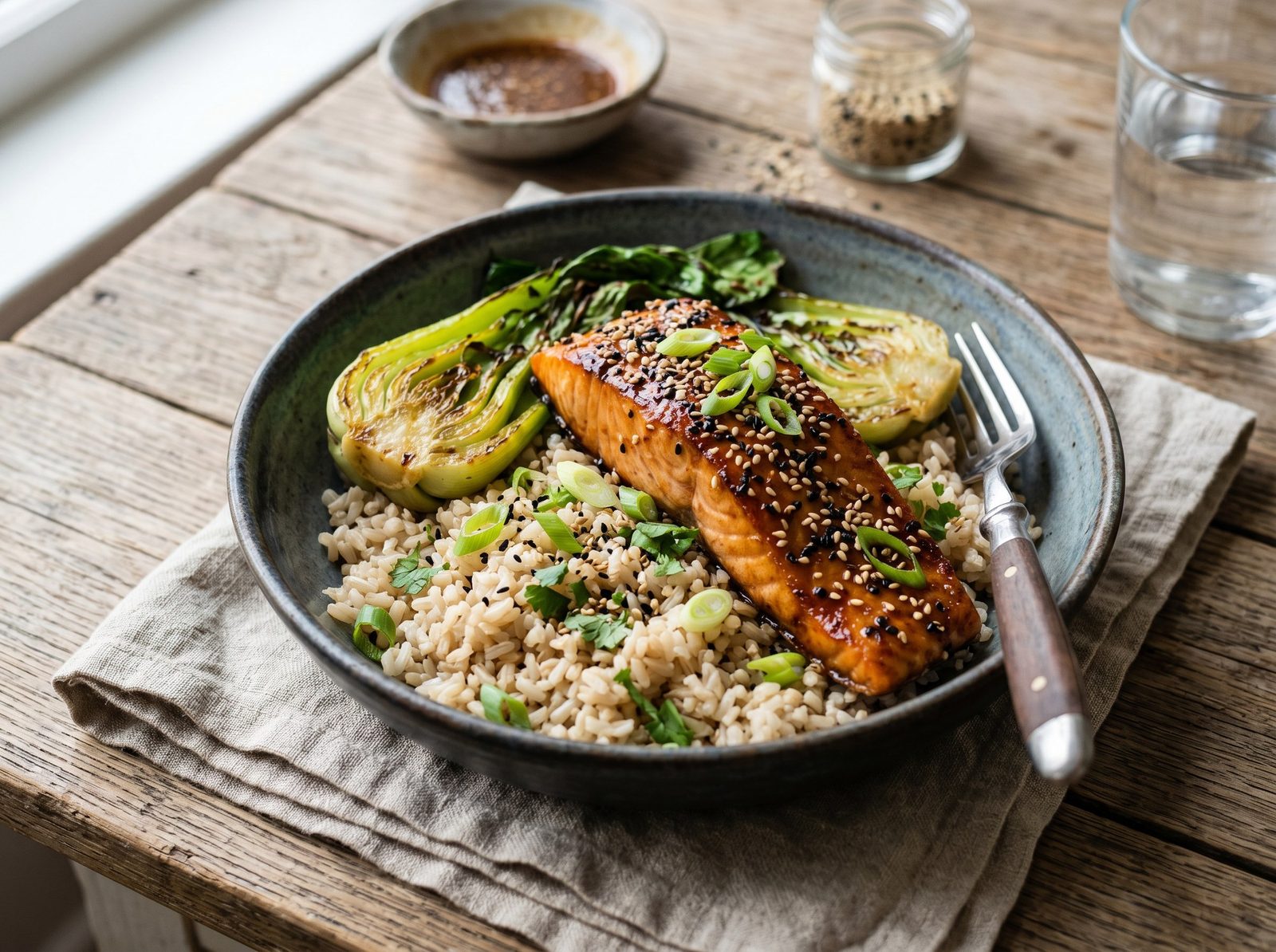
Sesame Salmon with Quick Bok Choy and Brown Rice
This is the kind of dinner that makes people think you went to more effort than you did. A tamari-sesame-honey glaze goes on the salmon, the salmon goes in the oven, and about twelve minutes later you've got sticky, caramelized fillets over garlicky bok choy and brown rice. The whole thing takes twenty minutes if you've got leftover rice in the fridge; thirty if you're starting from scratch with a microwave rice packet, which is an entirely respectable move and we will not be taking questions on that. The glaze also happens to work on chicken thighs, tofu, and basically anything you'd want to put on a bed of rice and feel good about.
- PRO
- GF
- DF
- ≤30
Estimated macros per serving
Calories ~720 · Protein ~42g · Carbs ~48g · Fat ~39g
Ingredients
For the glaze:
- 2 tablespoons certified gluten-free tamari or coconut aminos
- 1 tablespoon toasted sesame oil
- 1 tablespoon honey
- 1 teaspoon rice vinegar
- 1 clove garlic, grated
For the salmon and bok choy:
- 2 skin-on salmon fillets (about 6 oz each, approximately 1 inch thick)
- 1 tablespoon sesame seeds
- 1 tablespoon avocado oil
- 4 heads baby bok choy, halved lengthwise
- 1 clove garlic, thinly sliced
- 1½ cups cooked brown rice (leftover or microwavable packet)
Method
- Preheat the oven to 425°F (220°C) and line a small sheet pan with parchment paper.
- Whisk together the glaze ingredients: tamari, sesame oil, honey, rice vinegar, and garlic, in a small bowl.
- Place the salmon fillets skin-side down on the prepared sheet pan. Spoon about two-thirds of the glaze over the top of the fillets and sprinkle with sesame seeds.
- Roast for 10–12 minutes (for a ~1-inch fillet; check thinner fillets at 8–9 minutes), until the glaze is sticky and caramelized and the salmon flakes easily with a fork but is still slightly translucent in the center: carry-over heat will finish the job. For a fully cooked fillet, roast to an internal temperature of 145°F (63°C). If serving to pregnant individuals, young children, older adults, or anyone immunocompromised, cook to 145°F throughout.
- While the salmon roasts, heat the avocado oil in a large skillet over medium-high heat.
- Place the bok choy cut-side down in the skillet and cook for 2–3 minutes, until charred and golden on the flat side. Flip, reduce the heat to medium, add the sliced garlic, and cook for 1–2 minutes, until the garlic is golden and fragrant but not burnt.
- Drizzle the remaining glaze over the bok choy and toss briefly.
- Divide the rice between two bowls, top with the bok choy and salmon, and serve.
Variations & Notes
- Vegan Swap: Replace the salmon with 14 ounces of extra-firm tofu, sliced into planks. Increase the roasting time to 18–20 minutes, flipping halfway, until the edges are golden and chewy. Use maple syrup in place of honey.
- Paleo-Friendly Adjustment: Use coconut aminos instead of tamari. Swap the brown rice for cauliflower rice.
- Extra Hungry: Add an extra salmon fillet per person and increase the rice to 1 cup per serving. A fried egg on top is never a bad idea.
- Substitutions: Any rice works: white, wild, or even quinoa. Regular-size bok choy can be quartered instead of halved. Broccolini makes a great stand-in for bok choy if that's what you've got.
- Storage: Leftover salmon keeps for 2 days refrigerated. Reheat gently in a 300°F (150°C) oven for 5 minutes or eat cold over a salad: honestly just as good.
- Food Safety: Cooking salmon below 145°F carries some risk. Pregnant people, young children, older adults, and anyone immunocompromised should cook to the USDA target of 145°F.