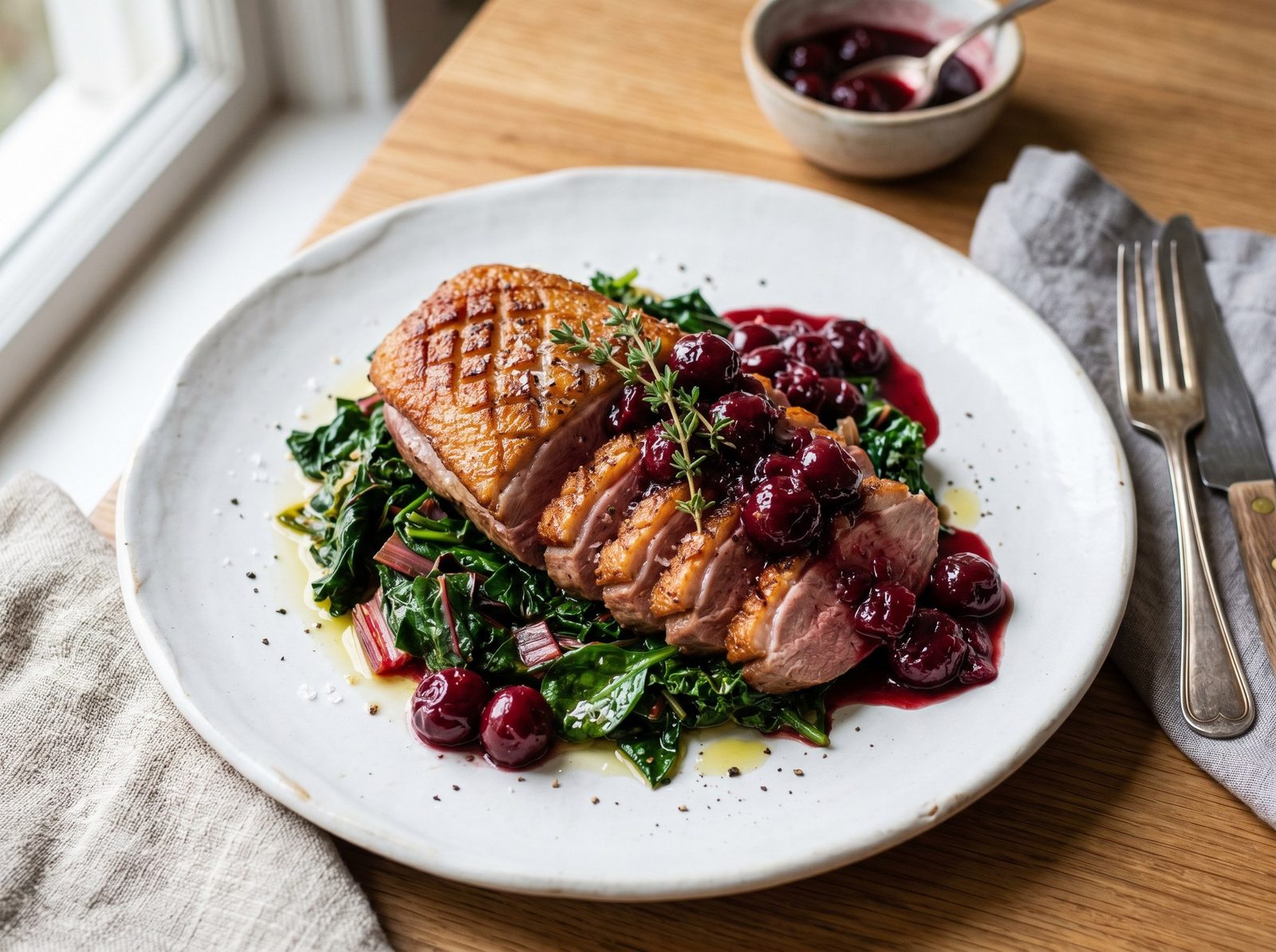
Seared Duck Breast with Cherry Sauce and Wilted Greens
Duck breast is the dinner party flex that's secretly easier than roasting a chicken. The trick is all in the technique: score the fat in a crosshatch, start it in a cold pan, and let the fat render slowly until the skin is shatteringly crisp while the inside stays rosy and medium-rare. The cherry sauce, tart, sweet, balsamic-laced, perfumed with thyme, cuts through the richness perfectly. Pile it over wilted greens and you've got a meal that feels like a special occasion even on a Tuesday. We save this one for when we want to remind each other that we still know how to cook something with a little finesse.
- PRO
- GF
- DF
- PF
Estimated macros per serving
Calories ~420 · Protein ~32g · Carbs ~20g · Fat ~23g
Ingredients
For the duck:
- 2 boneless duck breasts
- Kosher salt and freshly ground black pepper, to taste
For the cherry sauce:
- 1 cup sweet cherries (fresh or frozen, pitted and halved)
- 2 tablespoons balsamic vinegar
- 1 tablespoon honey
- 2 sprigs fresh thyme
- ¼ cup low-sodium chicken broth
For the wilted greens:
- 6 cups mixed hearty greens (such as Swiss chard, spinach, or kale)
- 1 tablespoon extra-virgin olive oil
- 2 cloves garlic, thinly sliced
Method
- Score the skin of each duck breast in a tight crosshatch pattern, cutting through the fat but not into the meat. Season generously with salt and pepper on both sides.
- Place the duck breasts skin-side down in a cold stainless steel or cast-iron skillet. Turn the heat to medium-low. This slow start renders the fat without burning the skin.
- Cook for 15–20 minutes without moving the breasts, letting the fat melt out and the skin turn deeply golden and crispy. Cook until the skin is deeply golden, the fat layer has visibly thinned, and the sound shifts from vigorous sizzling to a quieter, steady bubble. Breast size varies considerably; a larger breast may need the full 20 minutes. Pour off excess fat into a heatproof container as it accumulates (save it, duck fat is gold for roasting potatoes later).
- Flip the duck and cook for 3–5 minutes, checking with an instant-read thermometer; pull at 130°F / 54°C for medium-rare (the center will remain rosy pink). A thermometer is strongly recommended given that duck breast size varies significantly (from about 6 oz Pekin to 14+ oz Moulard/Magret — time alone is unreliable). Transfer to a cutting board and rest for 8 minutes.
- While the duck rests, use the same skillet (pour off all but 1 tablespoon of fat) over medium heat. Add the cherries and cook for 3 minutes, until they soften and release their juices. Add the balsamic vinegar, honey, thyme sprigs, and chicken broth. Simmer for 4–5 minutes, stirring occasionally, until the sauce thickens slightly and turns glossy. Remove the thyme sprigs. Taste and season with salt and pepper.
- In a separate pan, heat 1 tablespoon olive oil over medium heat. Add the sliced garlic and cook, stirring, until fragrant and just beginning to turn golden, about 45–60 seconds, then add the greens and toss until just wilted, about 2–3 minutes. Season with salt and pepper.
- Slice the duck against the grain into thin medallions. Fan over the wilted greens, then spoon the cherry sauce over the top.
Variations & Notes
- Vegan Swap: Sear thick slices of king oyster mushroom in olive oil until golden (they have a meaty, slightly chewy texture). Make the cherry sauce with maple syrup instead of honey and vegetable broth instead of chicken broth — it's incredible over them.
- Extra Hungry: Serve alongside roasted sweet potato or a scoop of wild rice.
- Substitutions: No fresh cherries? Frozen work perfectly: no need to thaw before adding to the pan. Cranberries also work for a tart variation (add an extra teaspoon of honey). Any robust green works for wilting.
- Storage: Duck is best eaten fresh, but sliced leftovers keep 2 days refrigerated. Reheat gently or serve cold over a salad. The cherry sauce keeps 3–4 days and reheats beautifully.
- A note on doneness: Duck breast is traditionally served medium-rare at 130°F, similar to steak — that is the culinary standard, and it's how this recipe is written. But be clear-eyed about the tradeoff: duck is poultry, and the USDA's guidance for duck breast specifically is 165°F, the same as chicken — a 35°F gap, not a rounding error. If you cook to 165°F, know that duck can still look slightly pink at that temperature and is safe; trust the thermometer, not the color.
- Food Safety: Cooking proteins below USDA-recommended temperatures carries some risk. Pregnant people, young children, older adults, and anyone immunocompromised should cook to the USDA target.