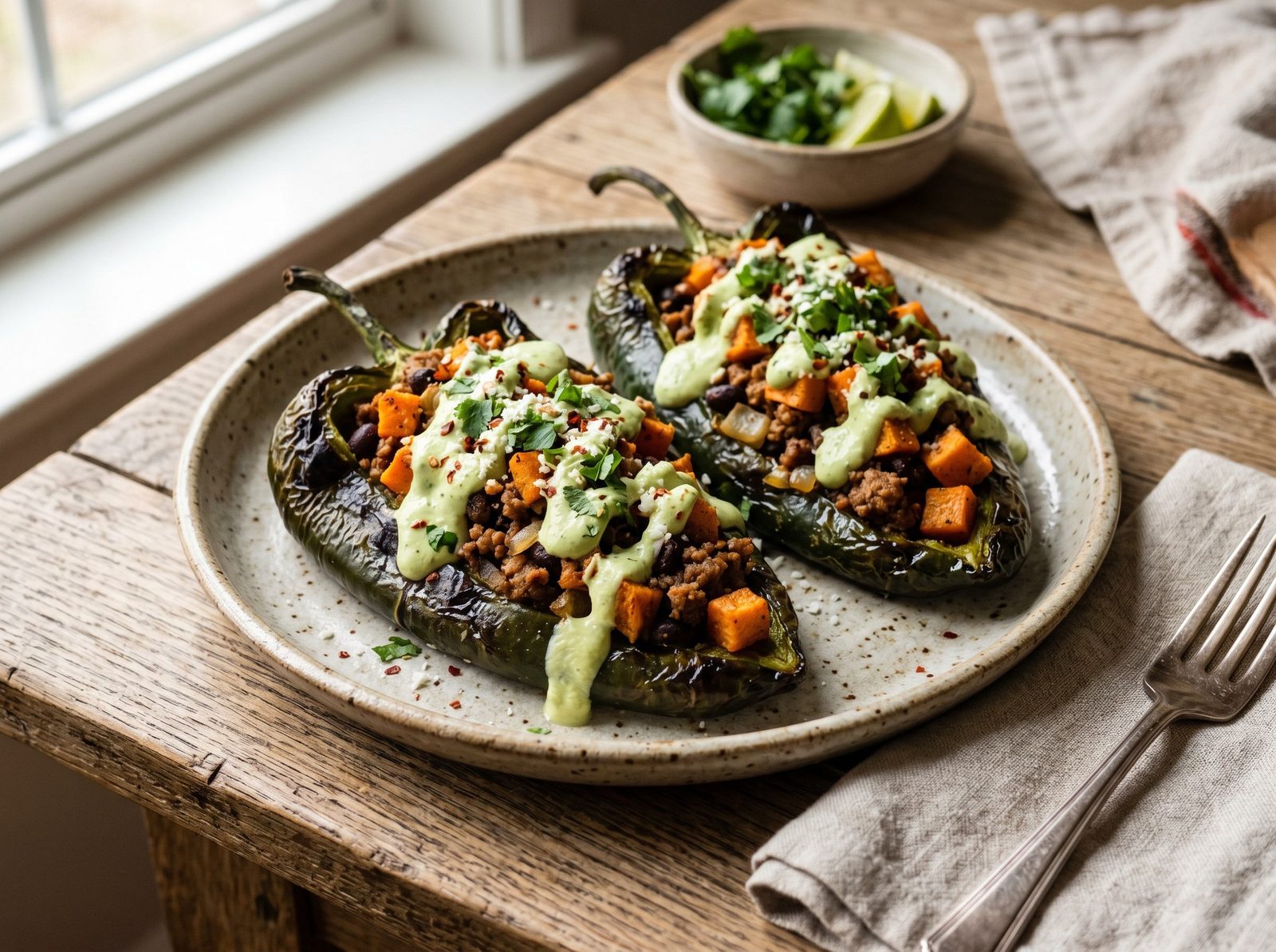
Ground Bison and Sweet Potato Stuffed Poblano Peppers
The ingredient list undersells it. Poblanos have a mild, smoky depth that regular bell peppers can't touch. The filling is bison and sweet potato, hearty, naturally sweet, and full of protein, laced with smoky cumin and black beans, then roasted until the peppers blister and soften. We top them with a little avocado crema and call it a night. They're also one of the most meal-prep-friendly things in this section; make a batch on Sunday and you're eating well through Wednesday without lifting a finger.
- PRO
- GF
- DF
- PREP
Calories ~400 · Protein ~30g · Carbs ~32g · Fat ~16g
Ingredients
For the peppers:
- 4 large poblano peppers, halved lengthwise and seeded
- 1 pound ground bison
- 1 medium sweet potato, peeled and diced small (about ½ inch)
- 1 (15-ounce) can black beans, drained and rinsed
- 1 teaspoon ground cumin
- 1 teaspoon smoked paprika
- ½ teaspoon garlic powder
- 1 small yellow onion, diced
- 1–2 teaspoons neutral oil (avocado or olive oil), plus more for the peppers
- Kosher salt and freshly ground black pepper, to taste
For the avocado crema:
- 1 ripe avocado
- 2 tablespoons fresh lime juice
- 2 tablespoons water
- Salt to taste
For serving:
- Fresh cilantro
Method
- Preheat the oven to 400°F (204°C). Line a large baking sheet with parchment paper.
- Lightly brush or spray the cut sides of the poblano halves with oil, arrange cut-side up on the baking sheet, and set aside.
- Heat a large skillet over medium-high heat. Add the ground bison and cook, breaking into crumbles, until browned and cooked through, about 5–6 minutes (internal temperature should reach 160°F). Transfer to a bowl.
- In the same skillet, add 1–2 teaspoons oil and sauté the onion and diced sweet potato over medium heat for 7–8 minutes, stirring occasionally, until the sweet potato is just tender and the onion is translucent.
- Return the bison to the skillet. Add the black beans, cumin, smoked paprika, and garlic powder. Stir to combine and cook for 2 minutes. Season with salt and pepper.
- Spoon the filling generously into each poblano half, mounding it slightly. Roast for 18–20 minutes, until the peppers are blistered and tender and the filling is heated through with lightly crisped edges.
- While the peppers roast, make the avocado crema: blend the avocado, lime juice, and water in a small blender or mash with a fork until smooth. Season with salt. The crema should be thick and drizzleable; add water 1 teaspoon at a time if it seems too thick. Make fresh — it does not keep well.
- Serve the stuffed peppers topped with avocado crema and fresh cilantro.
Variations & Notes
- Vegan Swap: Replace the bison with 1½ cups of cooked lentils or extra black beans. Add ½ teaspoon more smoked paprika for depth.
- Paleo-Friendly Adjustment: Skip the black beans and add extra sweet potato or diced zucchini to fill the gap.
- Extra Hungry: Serve over cauliflower rice or alongside a simple side salad with lime vinaigrette.
- Substitutions: Bell peppers work if you can't find poblanos, but you'll lose the subtle smokiness. Ground turkey or beef are fine substitutes for bison.
- Storage: Stuffed peppers keep 4 days refrigerated and freeze well for up to 2 months (freeze without the crema). Reheat in a 350°F (177°C) oven for 15 minutes. Make the crema fresh when serving.
# Interlude: What Racing 30 Miles of Obstacles Taught Me About Eating
Adam's perspective
---
Training changed the way I understand appetite. Once volume and intensity went up, food stopped feeling abstract and started feeling immediate. I could tell the difference between a day of eating that actually supported the work and a day that only looked adequate on paper.
The biggest lesson was volume. Long training blocks made it obvious that three tidy meals and a protein bar were not going to carry me through the runs. I needed real meals, repeated often, with enough carbohydrates to keep up and enough protein to recover.
<div class="pullquote">Good food does not need to look like athlete food to do athlete work.</div>
The second lesson was that appetite is useful information. Hard weeks changed what sounded good and what actually worked. Rice, potatoes, fruit, eggs, and bigger dinners were not a lack of discipline. They were the obvious response to higher output.
The third lesson was that recovery starts with what is waiting for you after the effort. A real meal after a hard session changes the next day. Under-eating shows up later.
That is the part of training this book keeps returning to. Good food does not need to look like athlete food to do athlete work. It just needs to be substantial enough, well-cooked enough, and available when it counts.
<!-- SECTION: type=recipe_section -->
# Planty but Whole